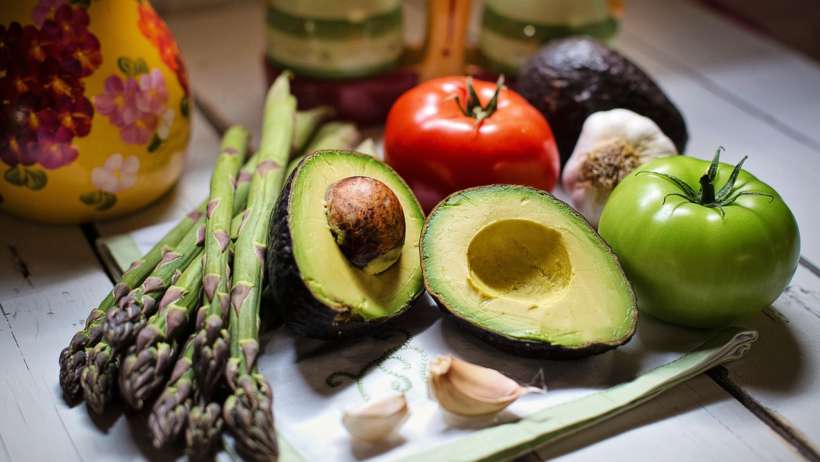
We all know that fruit and veggies are a huge part of eating healthily. But do you ever wonder how much you should be eating? Do you need to have them every day and what benefits do they bring? I’ve found some great research to confirm that fruit and veg along with other plant based foods have a really beneficial impact on our health that can stretch as far as disease prevention and weight management. Read on to see what I mean.
The composition of our gut microbiota is like a fingerprint, it’s unique to each individual and is shaped not only by our diets but our environment and lifestyle’s as well. That being said, studies have shown that what we eat can have a huge influence on bacteria composition.
In particular, by eating a wide variety of plant foods we can improve the diversity of our gut microbiota1. Could it be down to all of the wonderful fibre and health supporting anti-oxidants and polyphenol’s? Yes! Indeed these are accepted as valid reasons why our health improves with diverse plant food consumption.
In 2012 the American Gut Project launched the largest study of its kind. It aimed to look at the gut health of thousands of people mostly from the United States, but also from the UK and Australia. They discovered that those who ate more than 30 plant foods per week had more beneficial health markers than those who ate 10 or less2. They also found a correlation between eating a diverse range of plants and higher levels of conjugated linoleic acid which is known to improve body composition and play a part in heart disease prevention3. So eating your veggies can help to not only prevent disease but to combat weight gain, now that’s a strong reason to do it!
So which plant foods should we be eating? I would recommend that you include vegetables, fruits, nuts and seeds only. This is because lentils and pulses can cause gas in some, and the gluten in grains is considered inflammatory in many.
How many plant foods do you currently eat per week? It’s food for thought. After aiming to eat 30+ plant foods per week myself, here were my personal findings:
- It encourages experimentation with trying new foods
- New recipes and cooking techniques were needed which was a good challenge
- My family were happy with the new flavours and variations
- Physically I felt not much different than usual, but I feel very well overall
- The food shopping bill was more pricey which calls for cutting back on other items
- Food waste is a possibility but with careful planning, could be avoided
I’d recommend this challenge to anyone and the science backs it up. It’s suitable for all tastes from carnivores to vegans, just remember to still include good quality proteins and fats in each meal.
References
1. Leeming, E.R. et al. (2016). ‘Effect of diet on the gut microbiota: Rethinking intervention duration’, Nutrients, 11(12), pp.2862.
2. McDonald, D. et al. (2018). ‘American gut: an open platform for citizen science microbiome research’, American Society for Microbiology Journals.
3. Lehnen, T.E. et al. (2015). ‘A review on effects of conjugated linoleic fatty acid (CLA) upon body composition and energetic metabolism’, J Int Soc Sports Nutr, 12, pp.36.